Medical Billing
 Medical Coding
 Medical Audit
 Provider Credentialing
 Denial Management
 A/R Follow-up
 Private Practice
 Patient Help Desk
 Customized Reporting
 Out-of-Network Billing
 Internal Medicine
 Pediatrics
 Radiology
 Surgery
 Emergency Medicine
 Anesthesiology
 Cardiology
 Orthopedic
 Psychiatry
 Dentistry
 OB-GYN
 Family Medicine
Many healthcare practices provide Chronic Care Management (CCM) services every month but fail to capture the full reimbursement they deserve. Missed time logs, incorrect CPT coding, incomplete care plans, and unmanaged denials often result in thousands of dollars in lost recurring revenue.
Whether your practice is struggling with patient enrollment, monthly documentation, coding accuracy, or claim follow-up, our CCM billing specialists streamline the entire process so your team can focus on patient care instead of administrative burden.
Why CCM Billing Matters in 2026
Chronic Care Management is essential in today’s healthcare system, especially as over 129 million U.S. adults live with at least one chronic condition. Nearly 90% of national healthcare spending is directed toward chronic and mental health conditions, making efficient care coordination critical for both clinical and financial outcomes.
CCM medical billing allows providers to be reimbursed for non-face-to-face and face-to-face care coordination through CMS-approved CPT codes. This includes monitoring, medication management, care planning, and patient communication, ensuring better outcomes for patients while maintaining consistent and compliant revenue for healthcare practices.
CCM CPT Codes
CCM CPT codes reimburse providers for time spent coordinating care such as reviewing labs, adjusting treatment plans, managing medications, and coordinating with specialists.
1. Complex CCM CPT Codes (99487, 99489)
Used for high-risk patients with multiple chronic conditions requiring intensive care.
- 99487: 60 minutes/month → $135
- 99489: Additional 30 minutes → $78
Example: A patient with diabetes, heart failure, and kidney disease requires continuous coordination between multiple specialists and frequent care plan updates.
Comparison of Complex CCM Codes:
| CPT Code | Use Case | Minimum Time | Medicare Reimbursement |
| 99487 | Patients with multiple comorbidities | 60 min non-face-to-face | $135/month |
| 99489 | Additional time beyond 99487 | 30 min increments | $78 per 30 min |
Proper documentation of all activities is essential for compliance and reimbursement. By accurately recording time spent coordinating care, providers can ensure that complex CCM services are fully compensated.
2. Non-Complex CCM CPT Codes (99490, 99439, 99491, 99437)
Used for patients needing routine chronic care management.
- 99490: 20 minutes → $62/month
- 99439: Additional 20 minutes → $47
- 99491: First face-to-face visit → $83
- 99437: Additional visits → $21.88 per 30 min
Example: A patient with hypertension and asthma requires regular monitoring, education, and care plan updates.
Non-Complex CCM Comparison Table:
| CPT Code | Use Case | Minimum Time | Medicare Reimbursement |
| 99490 | Patients with two or more chronic conditions | 20 min non-face-to-face | $62/month |
| 99439 | Additional non-face-to-face time | 20 min increments | $47/20 min |
| 99491 | First face-to-face visit | 30 min | $83 |
| 99437 | Subsequent face-to-face visits | 30 min increments | $21.88/30 min |
Accurate documentation is critical for non-complex CCM as well. Providers must track time spent on all coordination activities to ensure compliance and optimize reimbursement.
CCM Documentation Requirements
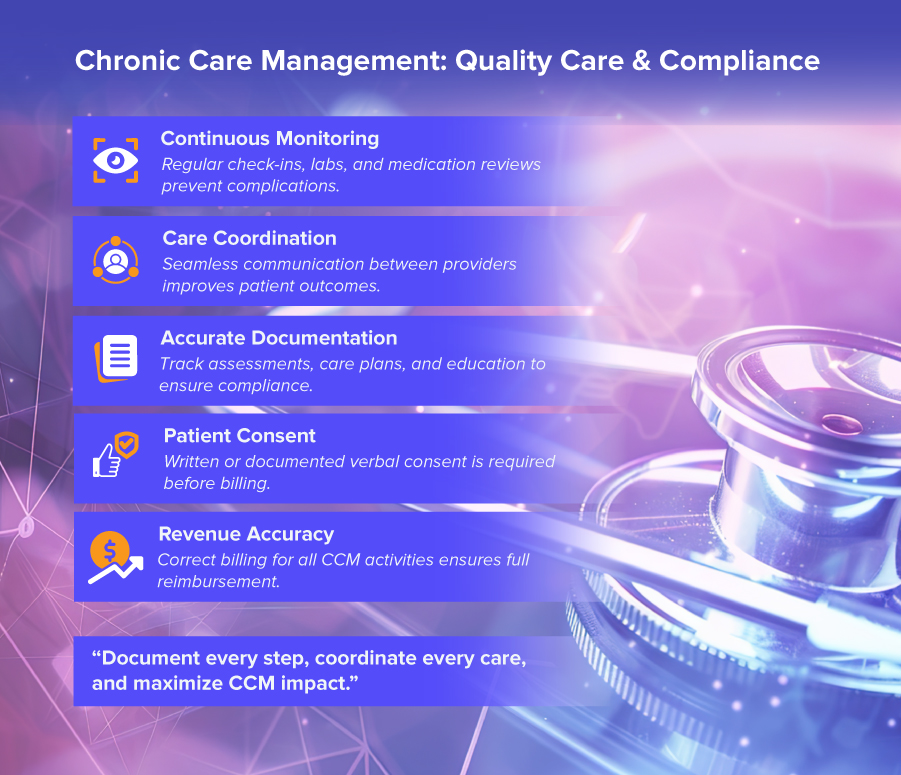
Accurate documentation and time tracking are the backbone of Chronic Care Management billing. CMS requires that providers clearly record the time spent on non-face-to-face and face-to-face care coordination activities. These records not only justify reimbursement but also demonstrate the medical necessity of the services provided.
Non-face-to-face activities include reviewing patient records, lab results, imaging, and medications, as well as coordinating care among multiple specialists. It also covers patient education, counseling sessions, and arranging referrals or procedures. Face-to-face activities, such as monthly visits under 99491 or subsequent visits under 99437, must also be documented carefully, including start and end times.
Without structured logs, practices risk underbilling and audit exposure for each patient, noting the following:
- Patient Assessment: Document the patient’s medical history, current symptoms, and functional status. This includes all ongoing monitoring of chronic conditions, lab review, and any emerging risks.
- Care Plan Development: Record all steps taken to create, update, or adjust the care plan, including consultations with other healthcare professionals and changes in treatment strategy.
- Medication Management: Include details on medication reconciliation, dosage adjustments, and education provided to the patient or caregiver.
- Patient Education and Counseling: Note the topics discussed during calls or visits, including lifestyle modifications, diet, exercise, and self-management techniques.
- Care Coordination: Document interactions with specialists, home health teams, and other providers involved in the patient’s care plan.
- Time Tracking: Each CCM activity must have clearly recorded start and end times, and the total minutes should meet the minimum threshold for the corresponding CPT code.
How to Submit CCM Claims Without Denials (Step-by-Step Process)
Even with accurate coding and proper documentation, revenue is only realized when claims are submitted correctly. This is where many practices lose money through small errors that lead to delays, denials, or underpayments.
Step 1: Gather Complete Patient & Service Information
A clean CCM claim starts with complete and organized data. Providers must verify patient demographics, Medicare details, and maintain a full record of CCM services performed during the billing period. This includes total time spent on non-face-to-face and face-to-face care coordination, along with detailed notes on care plan updates, medication management, and communication with specialists or caregivers. Missing or incomplete information at this stage often leads to claim rejection.
Step 2: Verify Eligibility & Patient Consent
Before submitting any claim, confirm that the patient is eligible for CCM services and that proper consent has been obtained and documented. Failure to verify eligibility or missing consent is one of the most common and avoidable reasons for denials.
Step 3: Select the Correct CPT Codes
Accurate CPT code selection is critical. The billed code must align with documented time thresholds and the level of service provided. Even small discrepancies between time logs and code selection can result in downcoding or denial, directly impacting revenue.
Step 4: Submit Claims Electronically (Preferred Method)
CCM services should be submitted using the CMS-1500 form, ideally through a Certified Electronic Health Record Technology (CEHRT) system or clearinghouse. Electronic submission reduces errors, accelerates processing, and improves reimbursement timelines compared to paper claims.
Step 5: Track Claims & Monitor Status
Submission is not the final step. Practices must actively monitor claim status through payer portals. Without proper tracking, denied or delayed claims often go unnoticed, leading to lost revenue.
Step 6: Identify and Resolve Denials Quickly
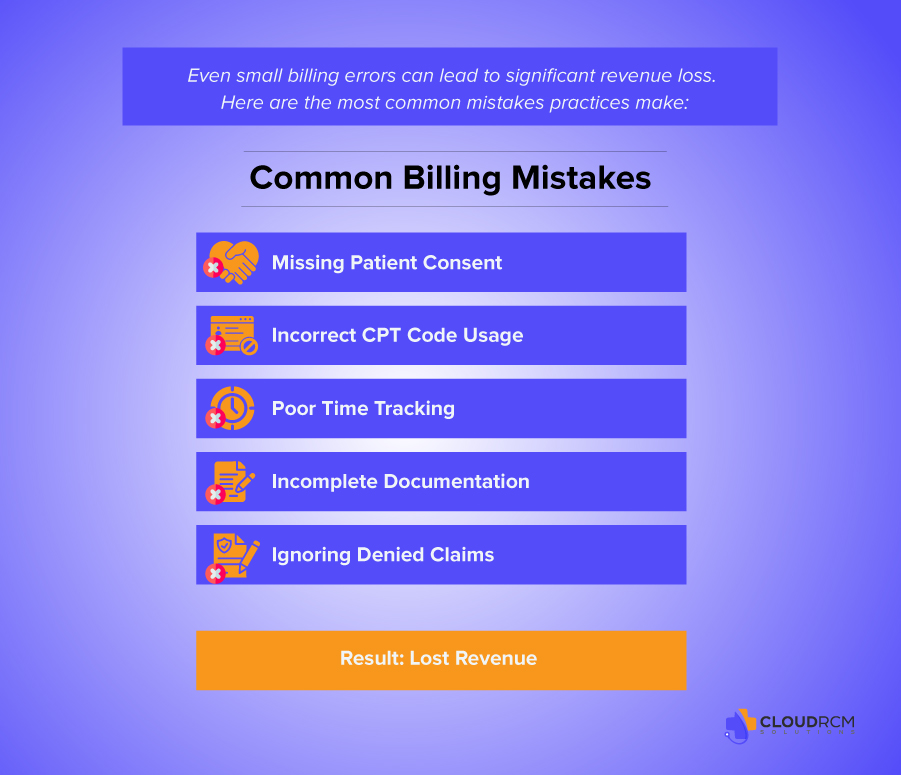
The most common CCM claim denials include incomplete time documentation, incorrect CPT code usage, missing consent, and failure to meet minimum time thresholds. Addressing these issues promptly and resubmitting claims ensures that revenue is recovered instead of written off.
For example, A patient receiving 90 minutes of care coordination may be billed under 99487 and 99489 to ensure full reimbursement.
CCM Revenue Potential: How Much Can Your Practice Earn in 2026?
Chronic Care Management (CCM) creates a predictable, recurring revenue stream for healthcare practices while improving outcomes for patients with chronic conditions. With 2026 CMS reimbursement rates, revenue is directly tied to accurate time tracking and proper CPT code usage.
CPT 99490 covers 20 minutes of non-face-to-face CCM services and reimburses approximately $63 per patient per month. A practice with 300 enrolled patients can generate around $18,900 monthly ($226,000 annually) from this code alone.
Additional time increases revenue further through CPT 99439, which reimburses about $47 per 20-minute increment. For example, 100 patients requiring extra monthly coordination can add roughly $4,700 per month in additional revenue.
For complex patients, CPT 99487 ($135/month) and 99489 (additional 30-minute increments) provide higher reimbursement for intensive care coordination. A single high-risk patient can generate $200+ monthly depending on documented time.
Provider-led CCM services under CPT 99491 and 99437 also add revenue through face-to-face care coordination, with reimbursements of about $85 for initial visits and $21.88 per additional 30 minutes.
Example Monthly Revenue
A 300-patient CCM program may generate:
- 200 patients under 99490: $12,600
- 50 patients under 99439: $2,350
- 20 complex patients under 99487/99489: $4,260
- 30 provider visits under 99491: $2,550
Total: $21,760/month (~$261,000/year) before expenses.
The key to maximizing CCM revenue is accurate time tracking, proper CPT selection, and consistent patient enrollment. When executed correctly, CCM becomes a scalable revenue model that grows with your patient population while improving chronic disease outcomes.
CCM Eligibility Criteria: Which Patients Qualify for Billing?
CCM is designed for Medicare patients with two or more chronic conditions lasting at least 12 months or until death, increasing risk of complications or hospitalization.
Common qualifying conditions include:
- Diabetes and cardiovascular disease
- COPD and asthma
- Chronic kidney disease
- Dementia and neurological disorders
- Cancer, autoimmune diseases, and mental health conditions
Key Requirements
To bill CCM, providers must ensure:
- A documented comprehensive care plan exists
- Patient consent is obtained and recorded
- Ongoing monthly care coordination is performed
Accurate patient selection ensures compliance, reduces denials, and maximizes reimbursement while focusing resources on high-risk patients who benefit most from continuous care management.
CCM Billing Frequency & Payer Rules You Must Know
Submitting Chronic Care Management (CCM) claims requires accurate timing, payer-specific compliance, and complete documentation to ensure clean reimbursement and avoid denials.
CMS generally allows CCM claims to be submitted on a monthly basis, which is the most common and effective approach for practices. Monthly submission aligns with care coordination cycles and simplifies time tracking. Inconsistent or delayed submissions can lead to missing documentation, while rushed submissions increase billing errors and denial risk.
Payer requirements may vary across Medicare, Medicare Advantage, and commercial insurers. Each payer may have different rules for documentation standards, prior authorization, and billing frequency. Practices must regularly review payer policies to stay compliant and avoid payment delays.
To maintain consistent reimbursement, claim submission should always reflect actual care delivery and documented time spent. Proper internal tracking systems and standardized workflows help ensure accuracy and reduce revenue leakage.
Key Billing Best Practices
- Submit CCM claims monthly in most cases
- Verify payer-specific billing and documentation rules
- Maintain accurate monthly time logs for each patient
- Ensure claims match actual care coordination activities
- Regularly update workflows based on CMS and payer changes
CCM Documentation Best Practices to Avoid Denials
Accurate documentation is the foundation of successful CCM billing and compliance. Every billable activity must be clearly recorded to support medical necessity and reimbursement.
Providers must maintain detailed records of all:
- Non-face-to-face care coordination
- Provider-patient communication
- Medication management and updates
- Specialist coordination and referrals
- Care plan development and revisions
Each patient must have a comprehensive, up-to-date care plan that includes chronic conditions, treatment goals, interventions, and follow-up schedules. Any changes in patient condition or care strategy must be documented promptly.
Time tracking is critical. CCM codes require strict monthly minimums, and all clinical staff time must be accurately recorded and totaled to justify billing. Missing or incomplete time logs are one of the leading causes of CCM claim denials.
Patient consent is also mandatory before billing CCM services. Written consent is preferred, but verbal consent is acceptable if properly documented in the patient record.
Strong documentation practices help:
- Reduce claim denials
- Pass audits with confidence
- Improve reimbursement accuracy
- Maintain CMS compliance
- Capture full revenue potential
Why Healthcare Practices Choose Cloud RCM for CCM Billing
Cloud RCM Solutions helps healthcare providers unlock the full financial potential of Chronic Care Management without adding administrative burden. From accurate CPT coding and real-time tracking to denial management and CMS compliance, our team ensures that every minute of care coordination is properly documented and reimbursed. We go beyond basic billing by optimizing workflows, reducing revenue leakage, and helping practices scale their CCM programs profitably while maintaining exceptional patient care.
Conclusion
Chronic Care Management is no longer optional; it’s a revenue-critical and patient-centered strategy in 2026. Practices that prioritize accurate coding, structured documentation, and streamlined billing workflows are not only improving outcomes but also unlocking consistent, scalable revenue. Yet without the right systems and expertise, a significant share of this revenue continues to slip through the cracks.
If your practice is delivering CCM but not capturing full reimbursement, it’s time to fix the gap. Let’s eliminate inefficiencies, reduce denials, and ensure every minute of care coordination is properly reimbursed.
Partner with Cloud RCM and start maximizing your CCM revenue today.
FAQs
Can CCM services be billed for patients with only one chronic condition?
No. CCM requires two or more chronic conditions expected to last at least 12 months or until end of life.
Can CCM be billed for telehealth services?
Yes. CCM is primarily non-face-to-face and can include telehealth communication, as long as all CMS requirements are met.
Can more than one unit of 99490 be billed per month?
No. Only one unit of 99490 can be billed per month. Additional time must be billed using add-on code 99439.
What type of patient consent is required?
Verbal or written consent is acceptable, but it must be documented in the patient record before billing CCM.
How often can CCM be billed?
CCM services are billed once per patient per calendar month, as long as time and documentation requirements are met.