Medical Billing
 Medical Coding
 Medical Audit
 Provider Credentialing
 Denial Management
 A/R Follow-up
 Private Practice
 Patient Help Desk
 Customized Reporting
 Out-of-Network Billing
 Internal Medicine
 Pediatrics
 Radiology
 Surgery
 Emergency Medicine
 Anesthesiology
 Cardiology
 Orthopedic
 Psychiatry
 Dentistry
 OB-GYN
 Family Medicine
Cardiology practices are facing a major reimbursement shift in 2026 as CMS and commercial payers continue expanding value-based care models. Traditional fee-for-service billing is becoming less predictable, with reimbursement increasingly tied to patient outcomes, quality performance, and care coordination rather than procedure volume alone.
As a result, many practices are experiencing rising denial rates, stricter documentation requirements, delayed reimbursements, and growing financial pressure despite steady patient demand.
Today, cardiology reimbursement depends heavily on:
- Quality reporting accuracy
- Risk adjustment coding
- Documentation integrity
- Readmission reduction performance
- Chronic disease management outcomes
Even small coding or documentation errors can now directly impact reimbursement and revenue stability. From a revenue cycle perspective, value-based care is already reshaping cardiology billing operations in 2026.
2. What is Value-Based Care in Healthcare?
Value-based care is a reimbursement model where healthcare providers are compensated based on the quality, effectiveness, and efficiency of care delivered rather than the number of services performed.
Under traditional fee-for-service systems, providers were reimbursed for each procedure, visit, or diagnostic service independently. In contrast, value-based care rewards providers for improving patient outcomes, reducing avoidable hospitalizations, and delivering cost-effective long-term care.
This model is rapidly expanding through CMS initiatives such as:
- MIPS (Merit-Based Incentive Payment System)
- MACRA (Medicare Access and CHIP Reauthorization Act)
- Accountable Care Organizations (ACOs)
- Bundled payment programs
- Chronic Care Management (CCM) initiatives
Fee-for-Service vs Value-Based Care
| Fee-for-Service | Value-Based Care |
| Payment per procedure | Payment based on outcomes |
| Volume-driven revenue | Performance-driven revenue |
| Short-term reimbursement focus | Long-term care accountability |
| Limited quality reporting | Extensive quality measurement |
| Predictable payment per visit | Variable reimbursement tied to performance |
For cardiology practices, this means revenue is no longer purely transactional. Reimbursement is now closely connected to clinical outcomes, quality reporting, patient management efficiency, and overall care coordination.
3. Why Cardiology is at the Center of Value-Based Care
Cardiology is one of the specialties most heavily impacted by value-based care because cardiovascular disease remains one of the highest-cost chronic conditions in healthcare.
Patients with heart failure, coronary artery disease, arrhythmias, and hypertension often require long-term monitoring, preventive interventions, follow-up visits, medication management, and coordinated care across multiple providers.
This makes cardiology highly measurable from a payer perspective.
Why Cardiology Faces Greater Value-Based Pressure
- High rates of hospital readmissions
- Expensive cardiac procedures under utilization review
- Long-term chronic disease management requirements
- Strong emphasis on preventive cardiovascular care
- Heavy dependence on quality outcome tracking
- Increased CMS oversight for cardiac treatment performance
For example, a cardiology practice managing heart failure patients may now be evaluated based on:
- 30-day readmission rates
- Blood pressure control outcomes
- Medication adherence
- Post-discharge follow-up compliance
- Preventive care effectiveness
As a result, cardiology billing is becoming increasingly tied to measurable patient outcomes rather than procedure volume alone.
4. How Value-Based Care is Changing Cardiology Billing Models
One of the biggest shifts in 2026 is the movement away from isolated CPT-based reimbursement toward bundled payments, shared savings models, and risk-adjusted reimbursement structures.
Under traditional billing systems, practices received reimbursement for each service independently. In value-based models, reimbursement may cover an entire episode of care.
For example:
- Coronary artery bypass graft (CABG) episodes
- Heart failure management programs
- Post-discharge cardiac monitoring
- Chronic cardiovascular disease management
Traditional vs Value-Based Billing Structures
| Traditional Billing | Value-Based Billing |
| Payment per service | Payment per care episode |
| Revenue generated by procedure volume | Revenue linked to patient outcomes |
| Minimal financial risk | Shared financial accountability |
| Transaction-focused billing | Continuous care management |
| Independent claims processing | Integrated quality reporting |
This creates a major shift in how cardiology practices approach revenue cycle management.
Instead of focusing only on claim submission, practices must now monitor:
- Long-term patient outcomes
- Quality performance scores
- Readmission reduction efforts
- Care coordination efficiency
- Cost management performance
5. Key CMS Changes Affecting Cardiology Billing in 2026
CMS continues accelerating value-based reimbursement programs across specialty care, including cardiology.
Several regulatory and reimbursement changes are directly impacting cardiology billing workflows in 2026.
Major CMS Trends Influencing Cardiology Revenue Cycles
- Expanded MIPS Performance Requirements
Cardiology practices now face stricter quality reporting requirements tied directly to reimbursement adjustments.
- Increased Readmission Penalties
Hospitals and providers managing cardiovascular patients are under growing pressure to reduce avoidable readmissions.
- Greater Use of Risk Adjustment Models
Accurate HCC coding and chronic condition documentation are becoming critical for reimbursement optimization.
- Growth of Chronic Care Management Programs
CMS continues expanding reimbursement opportunities tied to ongoing chronic disease monitoring and care coordination.
- Expansion of Bundled Payment Programs
More cardiac procedures are being reimbursed under bundled care models instead of isolated fee-for-service payments.
These changes are increasing both operational complexity and financial accountability across cardiology revenue cycles.
6. Impact on CPT Coding and Documentation Requirements
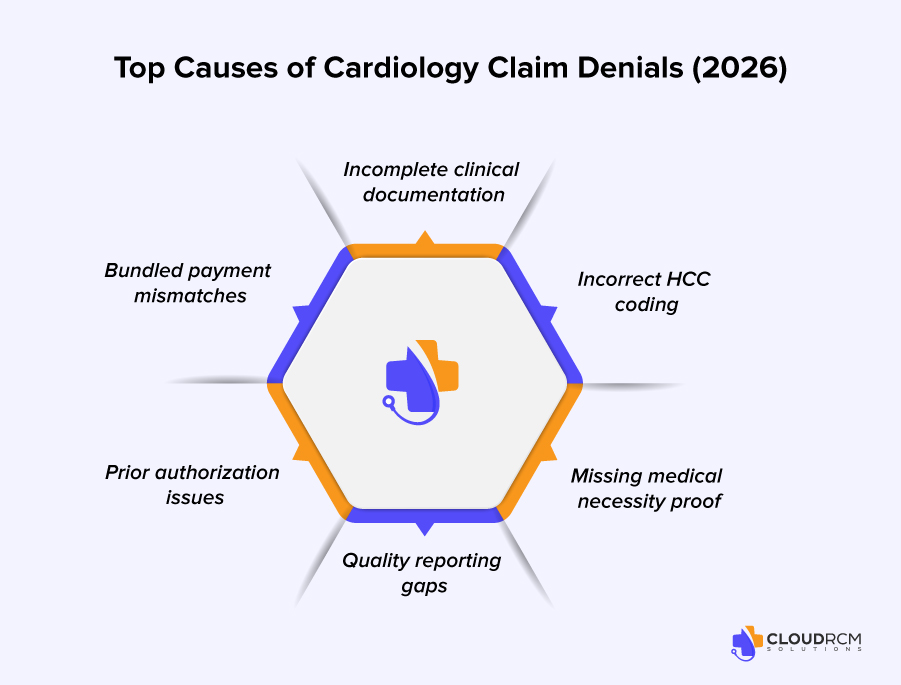
Under value-based care models, CPT coding and clinical documentation are no longer limited to basic claim approval processes. In 2026, they directly affect reimbursement accuracy, quality performance scoring, risk adjustment calculations, audit exposure, and long-term revenue stability for cardiology practices.
As reimbursement becomes increasingly tied to outcomes and payer performance evaluations, documentation expectations across cardiology billing workflows are becoming far more detailed and compliance-driven.
Why Documentation Matters More in Value-Based Cardiology Billing
Payers now evaluate more than whether a service was performed. They also assess:
- The severity of the patient’s condition
- The medical necessity behind treatment decisions
- Long-term care coordination efforts
- Chronic disease management accuracy
- Outcome-based treatment effectiveness
Because of this, incomplete or inconsistent documentation can significantly affect reimbursement performance.
Key Documentation and Coding Pressure Areas
- Risk Adjustment and HCC Coding
Value-based reimbursement models rely heavily on accurate HCC coding to determine patient risk levels and expected treatment costs. Missing chronic cardiovascular diagnoses, such as heart failure, hypertension, or coronary artery disease, can reduce reimbursement and distort risk adjustment scores.
- Heart Failure and Chronic Disease Documentation
Conditions requiring long-term management, especially heart failure and chronic cardiac disorders, now require more detailed documentation regarding disease severity, treatment plans, medication monitoring, and follow-up care.
- Quality Reporting Alignment
Clinical documentation must align closely with submitted quality metrics and performance reports. Discrepancies between physician notes and reported outcomes may lead to payer scrutiny, reimbursement reductions, or audit risks.
- Medical Necessity Validation
Payers are applying stricter medical-necessity reviews to cardiac testing, imaging, procedures, and chronic care management services. Supporting documentation must clearly justify why each service was clinically required.
- Ongoing Care Documentation
Since many cardiology patients require continuous monitoring and long-term treatment coordination, practices must maintain updated documentation throughout the entire care episode, not just during isolated visits.
Financial Impact of Documentation Errors
Even small documentation and coding issues can now create major financial consequences for cardiology practices.
Common risks include:
- Increased claim denials
- Reduced reimbursement rates
- Loss of performance-based incentives
- Compliance penalties and audit exposure
- Revenue leakage from inaccurate reporting
In value-based cardiology billing, documentation integrity has become directly connected to financial performance. Practices that maintain accurate, consistent, and audit-ready documentation are better positioned to protect reimbursement and improve long-term revenue stability.
7. Changes in Reimbursement Structures for Cardiology Practices
Cardiology reimbursement models are increasingly operating under hybrid payment systems that combine fee-for-service reimbursement with performance-based incentives and shared-risk agreements.
Reimbursement Structure Evolution
| Previous Model | Current Model |
| Volume-based payments | Hybrid value-based reimbursement |
| Predictable procedure revenue | Variable performance-linked payments |
| Limited reporting requirements | Extensive quality reporting obligations |
| Minimal payer oversight | Continuous payer monitoring |
| Stable reimbursement cycles | Outcome-dependent reimbursement timing |
This means two practices performing identical cardiac procedures may receive very different reimbursement outcomes depending on:
- Quality scores
- Readmission performance
- Documentation accuracy
- Risk adjustment reporting
- Patient outcome metrics
From a financial standpoint, reimbursement predictability is becoming increasingly dependent on operational efficiency and reporting performance.
8. Role of Quality Metrics in Cardiology Billing
Quality metrics now play a direct role in determining reimbursement performance for cardiology practices.
Payers evaluate providers using structured performance indicators designed to measure treatment effectiveness, care coordination, and patient outcomes.
Key Cardiology Quality Metrics
- 30-day hospital readmission rates
- Blood pressure control performance
- Cholesterol management outcomes
- Heart failure treatment effectiveness
- Preventive cardiovascular screening compliance
- Patient follow-up adherence rates
Financial Impact of Quality Performance
| Performance Level | Financial Outcome |
| High performance | Incentives and bonus payments |
| Moderate performance | Standard reimbursement |
| Low performance | Reduced reimbursement and penalties |
In value-based cardiology billing, clinical performance and financial performance are now directly connected.
9. Common Billing Challenges Cardiology Practices Face in 2026
As value-based care expands, cardiology practices are facing growing administrative and financial pressure.
- Revenue Instability
Payments are becoming less predictable due to outcome-based reimbursement structures.
- Increased Claim Denials
Payers are applying stricter documentation and medical necessity reviews.
- Complex Quality Reporting Requirements
Practices must continuously track and report detailed performance metrics.
- AR Delays
Performance-based reimbursement timelines often extend payment cycles.
- Bundled Payment Reconciliation Issues
Tracking reimbursement across full care episodes creates operational complexity.
- Audit Risk Exposure
Incomplete documentation and inaccurate coding increase compliance vulnerability.
Even high-volume cardiology practices are experiencing cash flow disruption due to delayed reimbursements and growing payer scrutiny.
10. How Cardiology Practices Can Adapt Successfully
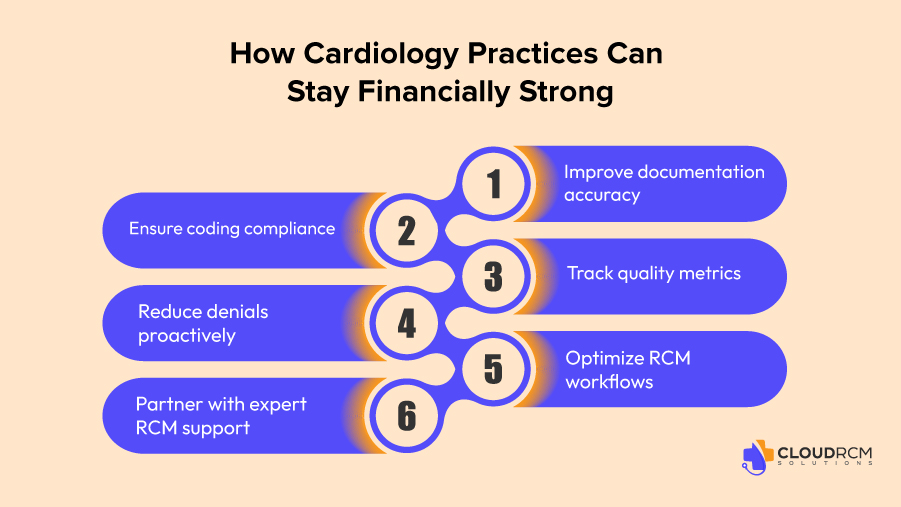
To remain financially stable, cardiology practices must strengthen their revenue cycle infrastructure and align billing operations with value-based reimbursement requirements.
This requires moving beyond reactive claims management toward proactive revenue optimization strategies.
Key Adaptation Strategies
- Strengthening end-to-end revenue cycle workflows
- Improving documentation consistency and audit readiness
- Enhancing denial prevention systems
- Implementing real-time quality performance tracking
- Training staff on value-based coding requirements
- Improving risk adjustment accuracy
- Using predictive analytics for reimbursement forecasting
- Partnering with specialized cardiology billing experts
Practices that adapt early are better positioned to improve reimbursement consistency, reduce denial exposure, and strengthen long-term financial stability.
11. Role of Technology and AI in Value-Based Cardiology Billing
Technology is becoming essential for managing the complexity of modern cardiology billing systems.
AI-driven revenue cycle tools now help practices identify financial risks before they impact reimbursement performance.
Key AI Applications in Cardiology Billing
- Predicting denial risk before claim submission
- Automating claims tracking and follow-ups
- Improving coding accuracy and HCC reporting
- Detecting documentation inconsistencies
- Enhancing payer reporting compliance
- Supporting reimbursement forecasting analytics
AI allows practices to shift from reactive revenue correction to proactive revenue protection.
This significantly reduces coding-driven revenue leakage and improves operational efficiency.
12. Future of Cardiology Billing Under Value-Based Care
The future of cardiology billing will continue moving toward deeper integration between clinical outcomes, payer accountability, and financial performance measurement.
Emerging Trends Shaping the Future
- Expansion of CMS value-based reimbursement programs
- Greater payer control over quality reporting standards
- Increased use of predictive analytics in RCM
- Higher reliance on chronic care management reimbursement
- Wider adoption of remote patient monitoring (RPM) billing
- Stronger focus on preventive cardiovascular care outcomes
Practices that fail to adapt may face declining reimbursement stability, while organizations aligned with value-based systems will likely experience stronger incentive capture and improved financial sustainability.
The financial gap between early adopters and non-adopters is already widening across the cardiology landscape.
13. Why Cardiology Practices Partner with Cloud RCM Solutions
As value-based reimbursement models continue to reshape cardiology billing, practices need stronger revenue cycle strategies to maintain financial stability and reduce reimbursement risk.
Cloud RCM Solutions helps cardiology practices navigate this transition through specialized billing support, denial prevention strategies, accurate coding workflows, and performance-focused revenue cycle management solutions.
Key support areas include:
- Cardiology-specific billing and coding expertise
- Denial management and AR recovery support
- Risk adjustment and documentation review assistance
- Quality reporting workflow optimization
- Real-time claims tracking and reimbursement visibility
- Revenue leakage prevention strategies
- End-to-end cardiology revenue cycle management
By improving operational visibility and reimbursement accuracy, cardiology practices can better adapt to the growing demands of value-based care.
14. Conclusion
Value-based care is reshaping cardiology billing in 2026, shifting reimbursement from procedure volume to outcomes, quality metrics, and care coordination. This is increasing documentation requirements, denial scrutiny, and reimbursement complexity across practices.
Practices that adapt with strong revenue cycle systems are achieving more stable payments, while others face growing revenue leakage and delays. Success now depends on accurate documentation, compliant coding, and alignment with value-based billing requirements.
Contact us today to strengthen your cardiology revenue cycle, reduce denials, and improve reimbursement performance before value-based billing complexity impacts your practice revenue.
FAQ’s
Why is my cardiology practice getting paid less even with higher patient volume?
Under value-based care, reimbursement is tied more closely to patient outcomes, quality scores, and reporting accuracy rather than procedure volume alone. Higher patient volume no longer guarantees higher reimbursement.
Why are cardiology claim denials increasing in 2026?
Denials are increasing due to stricter payer audits, documentation gaps, coding inaccuracies, missing quality reporting data, and growing medical necessity scrutiny under value-based reimbursement models.
How does value-based care change cardiology reimbursement?
Instead of paying separately for every procedure, value-based care uses bundled payments, performance incentives, and shared-risk arrangements tied to treatment outcomes and cost efficiency.
Why are reimbursements delayed even when claims are clean?
Under value-based models, reimbursement timelines may depend on quality performance evaluations, payer reviews, and reporting cycles rather than claim submission alone.
What billing mistakes are causing revenue leakage in cardiology practices?
Common issues include inaccurate HCC coding, incomplete documentation, missed quality reporting requirements, poor bundled payment tracking, and weak denial management processes.
How can cardiology practices prepare for value-based reimbursement?
Practices should strengthen documentation workflows, improve quality reporting systems, optimize risk adjustment coding, invest in analytics tools, and enhance denial prevention strategies.
Is outsourcing cardiology billing worth it in 2026?
Many practices are outsourcing cardiology billing because value-based reimbursement models require advanced expertise in coding, compliance, denial management, quality reporting, and payer-specific reimbursement rules.