Medical Billing
 Medical Coding
 Medical Audit
 Provider Credentialing
 Denial Management
 A/R Follow-up
 Private Practice
 Patient Help Desk
 Customized Reporting
 Out-of-Network Billing
 Internal Medicine
 Pediatrics
 Radiology
 Surgery
 Emergency Medicine
 Anesthesiology
 Cardiology
 Orthopedic
 Psychiatry
 Dentistry
 OB-GYN
 Family Medicine
Chiropractic credentialing is the process of verifying a Doctor of Chiropractic’s qualifications and enrolling them with insurance networks so they can provide covered services as an in-network provider. The process confirms essential information such as chiropractic education, state licensure, National Provider Identifier (NPI), malpractice insurance, and professional history before payer approval.
As healthcare provider networks continue to expand, accurate credentialing has become essential for chiropractors who want reliable insurance participation and reimbursement. With millions of healthcare providers registered through NPPES, insurance companies rely on structured credentialing processes to verify providers, reduce compliance risks, and maintain quality care standards.
What Are Chiropractic Credentialing Services?
Chiropractic credentialing services help chiropractors become approved providers with insurance companies, healthcare networks, Medicare, Medicaid, and other payer organizations.
Before an insurance company allows a chiropractor to join its network, it must verify that the provider meets specific professional and regulatory standards.
This verification process typically includes:
- Doctor of Chiropractic (DC) education verification
- State chiropractic license verification
- National Provider Identifier (NPI) validation
- Malpractice insurance verification
- Work history review
- Professional references when required
- Background and compliance checks
- Provider information validation through credentialing databases
Once the credentialing process is completed, the chiropractor receives approval to participate in the payer network and can provide covered services to insured patients.
Without proper credentialing, a chiropractor may still treat patients but may not receive in-network reimbursement from insurance companies.
Why Chiropractic Credentialing Matters For Your Practice
Insurance participation plays an important role in how patients choose healthcare providers. Many patients prefer chiropractors who are already connected with their insurance plans because it reduces out-of-pocket expenses and makes care more accessible.
Professional chiropractic credentialing helps practices:
Expand Patient Access
Being credentialed with insurance networks allows chiropractors to serve a larger patient population.
Many individuals search specifically for in-network providers because their insurance coverage influences where they receive care.
By joining relevant payer networks, chiropractic practices can improve visibility among insured patients who may otherwise choose another provider.
Improve Revenue Opportunities
Credentialing creates the foundation for receiving insurance reimbursement.
Without completed enrollment:
- Claims may deny
- Payments may be delayed
- Services may process as out-of-network
- Revenue opportunities may be missed
A properly managed credentialing process helps chiropractors establish smoother payment workflows and reduce unnecessary administrative issues.
Build Patient Trust
Insurance network participation demonstrates that a provider has completed payer verification requirements and meets professional standards.
For many patients, seeing that a chiropractor accepts their insurance provides additional confidence when choosing a healthcare provider.
Reduce Administrative Burden
Credentialing involves detailed documentation, payer communication, application tracking, and compliance monitoring.
Managing these tasks internally can become overwhelming, especially for:
- Solo chiropractors
- Multi-provider clinics
- Practices expanding into new locations
Professional credentialing support allows staff members to spend more time managing patients rather than chasing paperwork.
Credentialing helps create a strong foundation for reimbursement, but accurate billing practices are equally important. Explore common billing mistakes chiropractors should avoid.
Our Chiropractic Credentialing Services
CloudRCM provides comprehensive chiropractic credentialing support designed specifically for healthcare providers who want a smoother insurance enrollment process.
Our services include:
Insurance Payer Enrollment For Chiropractors
Insurance enrollment is one of the most important parts of chiropractic credentialing.
CloudRCM helps chiropractors apply with:
- Medicare
- Medicaid programs
- Blue Cross Blue Shield plans
- UnitedHealthcare
- Aetna
- Cigna
- Humana
- Regional insurance networks
- Other commercial payers
Each insurance company has different requirements, forms, portals, and approval processes.
Our team helps manage the enrollment workflow by preparing applications, reviewing documentation, submitting information correctly, and following up with payers throughout the process.
CAQH Profile Management For Chiropractors
The Council for Affordable Quality Healthcare (CAQH) ProView system is a major component of insurance credentialing for many commercial payers.
Insurance companies use CAQH information to verify provider details before approving network participation.
CloudRCM helps chiropractors manage:
- CAQH profile creation
- Provider information updates
- Document uploads
- License information
- Practice location updates
- Attestation monitoring
- Payer authorization
Common CAQH issues that create delays include:
- Expired information
- Missing documents
- Incorrect addresses
- Inconsistent provider details
- Unverified credentials
Maintaining accurate CAQH information helps prevent avoidable enrollment delays.
Primary Source Verification
Insurance companies verify provider credentials directly from original sources before approving participation.
This process may include verification of:
- Chiropractic education
- Professional licenses
- Certifications
- Malpractice coverage
- Work history
- Professional standing
CloudRCM helps organize and prepare documentation to ensure payer verification can move forward efficiently.
Medicare Credentialing For Chiropractors
Medicare credentialing requires chiropractors to follow specific enrollment requirements before billing Medicare beneficiaries.
CloudRCM assists providers with:
- Medicare enrollment guidance
- PECOS enrollment support
- Provider information review
- Enrollment documentation preparation
- Status tracking
Medicare has unique requirements for chiropractic services, including specific coverage rules related to spinal manipulation.
Understanding Medicare enrollment requirements before submitting claims helps reduce billing complications after approval.
Medicaid And Commercial Insurance Enrollment
Medicaid credentialing requirements vary depending on the state Medicaid program and payer rules.
Commercial insurance companies also have their own enrollment procedures, network requirements, and documentation standards.
CloudRCM helps chiropractors navigate different payer processes by:
- Identifying required documentation
- Preparing enrollment materials
- Managing submissions
- Tracking application progress
- Communicating with payer representatives
Chiropractic Recredentialing Services
Credentialing does not end after initial approval.
Insurance companies require providers to complete recredentialing periodically to confirm that their information remains accurate and their qualifications are still valid.
CloudRCM helps chiropractors maintain active participation through:
- Credential expiration tracking
- License monitoring
- CAQH updates
- Malpractice insurance updates
- Payer renewal management
Failure to maintain updated credential information can lead to administrative issues, payment delays, or loss of network participation.
Credentialing Support For New Chiropractors And Growing Practices
Adding a new chiropractor to an existing practice does not always mean they can immediately bill under current insurance agreements.
New providers generally need their own credentialing and enrollment process.
CloudRCM helps growing practices with:
- New provider enrollment
- Associate chiropractor credentialing
- Group practice enrollment
- Provider updates
- Additional payer applications
Starting credentialing early helps reduce delays when bringing new providers into a practice.
Chiropractic Credentialing Process Step By Step
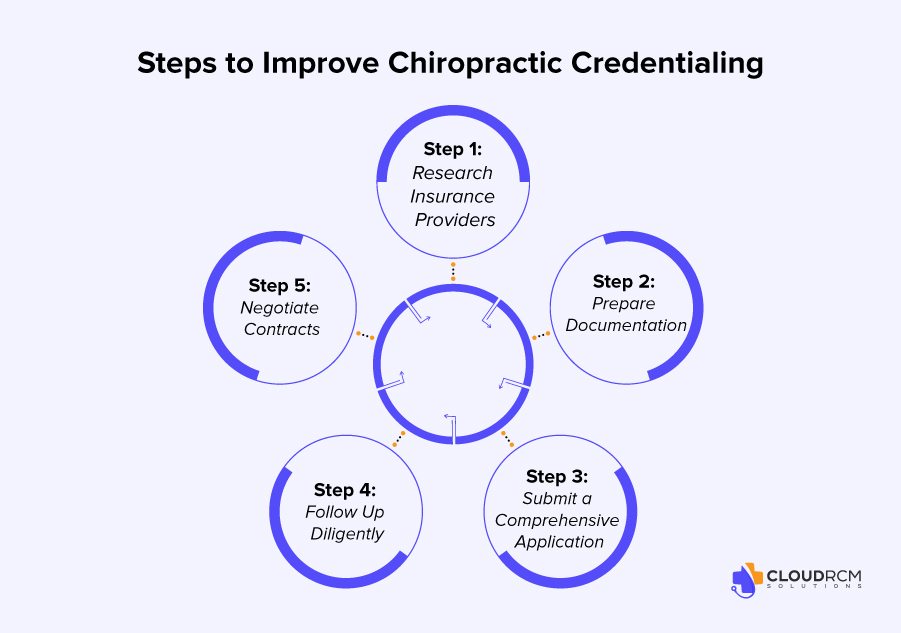
A successful credentialing process requires accuracy, organization, and consistent follow-up.
Step 1 Collect Provider Information
The first step is gathering all required provider details.
Common information includes:
- Personal information
- Chiropractic license details
- Education history
- NPI information
- Malpractice insurance
- Practice details
- Work history
A complete information package helps prevent delays later.
Step 2 Verify Provider Credentials
The credentialing team reviews documentation and confirms accuracy before submitting applications.
This includes checking:
- License status
- Education records
- Provider identifiers
- Insurance coverage
- Professional history
Early verification helps identify missing information before payer review.
Step 3 Complete And Update CAQH Profile
For many commercial payers, CAQH serves as a central source of provider information.
The profile must contain accurate and current information before payer authorization and submission.
Step 4 Submit Insurance Applications
Applications are submitted to selected insurance networks based on practice goals and patient needs.
Each payer may have different:
- Forms
- Enrollment portals
- Documentation requirements
- Review timelines
Step 5 Insurance Review And Approval
After submission, insurance companies review the provider file.
During this stage, payers may:
- Verify credentials
- Request additional documentation
- Complete internal reviews
- Approve network participation
Step 6 Maintain Credential Status
After approval, providers must continue maintaining accurate information.
Ongoing tasks include:
- Updating CAQH
- Renewing licenses
- Tracking payer deadlines
- Completing recredentialing requirements
Documents Needed For Chiropractic Credentialing
Although requirements vary by payer, chiropractors commonly need:
| Document | Purpose |
| Chiropractic License | Confirms legal authorization to practice |
| Doctor of Chiropractic Degree | Verifies education |
| NPI Number | Identifies the provider |
| CAQH Profile | Provides verified provider information |
| Malpractice Insurance | Confirms professional liability coverage |
| Work History | Reviews professional background |
| W-9 Form | Confirms tax information |
| Practice Information | Supports enrollment location details |
Preparing documents before beginning credentialing helps reduce unnecessary delays.
How Long Does Chiropractic Credentialing Take?
The timeline for chiropractic credentialing depends on several factors, including:
- Insurance payer
- Documentation accuracy
- Provider history
- State requirements
- Verification process
In many cases, chiropractic credentialing can take approximately 60 to 120 days from application submission to approval.
Some applications move faster when documentation is complete, while others may take longer if payers request additional information or corrections.
Factors that commonly delay credentialing include:
- Missing paperwork
- Incorrect provider information
- Expired documents
- Incomplete CAQH profiles
- Slow payer responses
Common Chiropractic Credentialing Challenges
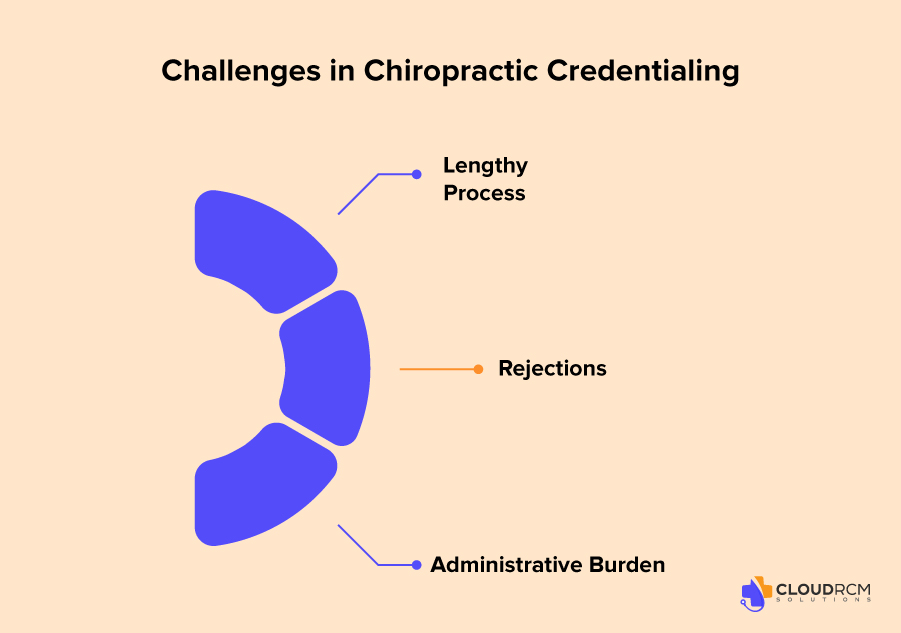
Incomplete Applications
Missing information is one of the most common reasons applications are delayed.
A small documentation issue can place an application on hold until corrections are submitted.
CAQH Errors
Incorrect or outdated CAQH information can prevent payers from verifying provider data.
Regular updates help maintain accurate enrollment information.
Incorrect Provider Information
Differences between:
- NPI records
- CAQH profiles
- Insurance applications
- Tax documents
can create verification problems.
Payer-Specific Requirements
Every insurance company follows different enrollment procedures.
Submitting the wrong forms or using the wrong process can add unnecessary delays.
Can Chiropractors Bill Insurance Before Credentialing Approval?
Chiropractors may provide services before credentialing is completed, but insurance reimbursement depends on payer approval and effective participation dates.
Submitting claims before receiving an official effective date may result in:
- Claim denials
- Out-of-network processing
- Payment delays
Practices should confirm payer approval before billing insured services as an in-network provider.
Credentialing For Multi Location Chiropractic Practices
Multi-location chiropractic groups often face additional enrollment challenges.
Each location may require accurate payer information, including:
- Practice addresses
- Provider relationships
- Group information
- Location enrollment details
CloudRCM helps growing chiropractic organizations manage credentialing requirements across multiple providers and locations.
Why Outsource Chiropractic Credentialing Services?
Managing credentialing internally requires significant time and attention.
Outsourcing helps chiropractic practices:
Save Staff Time
Reduce hours spent managing payer paperwork and follow-ups.
Improve Accuracy
Experienced credentialing specialists understand common application issues and documentation requirements.
Speed Up Enrollment
Consistent follow-up helps prevent applications from sitting unresolved.
Maintain Compliance
Professional credentialing support helps practices stay updated with payer requirements.
Why Do Patients Value Chiropractors Who Are Credentialed?
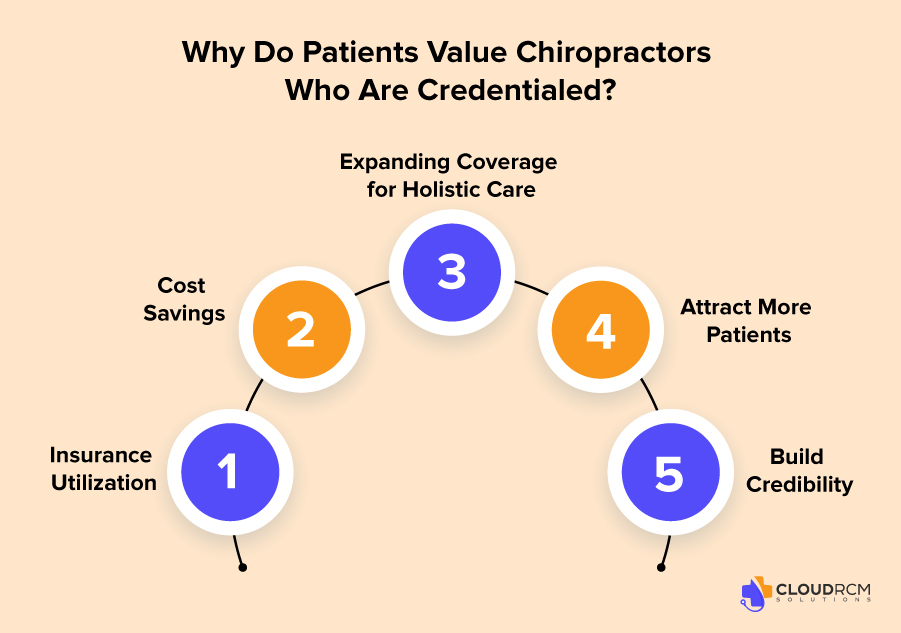
Credentialing helps chiropractors build trust, expand patient access, and create stronger revenue opportunities by allowing them to participate with insurance networks. In-network status makes care more affordable for patients, reduces out-of-pocket costs, and helps practices attract individuals who prefer using their insurance benefits.
Beyond improving patient reach, professional credentialing strengthens credibility, supports consistent reimbursements, and gives chiropractic practices a competitive advantage over cash-only providers.
Grow Your Chiropractic Practice With Professional Credentialing Support
Insurance credentialing is an essential foundation for chiropractic practices that want to expand patient access and maintain reliable reimbursement.
CloudRCM helps chiropractors simplify complex enrollment processes by managing payer applications, CAQH updates, provider verification, and ongoing credentialing requirements.
Schedule an appointment with CloudRCM today to learn how professional chiropractic credentialing services can support your practice growth.
Frequently Asked Questions
What are the most common reasons for credentialing delays or denials?
Delays often occur due to missing paperwork, inaccurate details, or slow payer responses. Applications are sometimes denied for incomplete CAQH profiles, outdated licenses, or missing malpractice coverage. Always double-check documents and maintain accurate provider data.
How often do chiropractors need to recredential?
Most insurance networks require providers to complete recredentialing periodically to confirm updated information and continued eligibility.
How does credentialing benefit chiropractic practices financially?
Credentialing connects your practice with insured patients, which can increase patient volume by up to 40%. It improves cash flow through consistent reimbursements, enhances patient retention, and strengthens your professional credibility with both patients and insurers.
Does CloudRCM offer chiropractic billing services too?
Yes, CloudRCM provides end-to-end medical billing and credentialing services for chiropractors. Our solutions reduce claim denials, improve cash flow, and ensure compliance with payer policies — helping your practice grow sustainably.
Do new chiropractors need separate credentialing?
Yes. New chiropractors generally require their own credentialing and enrollment even when joining an existing practice.