
 Medical Billing
 Medical Coding
 Medical Audit
 Provider Credentialing
 Denial Management
 A/R Follow-up
 Private Practice
 Patient Help Desk
 Customized Reporting
 Out-of-Network Billing
 Internal Medicine
 Pediatrics
 Radiology
 Surgery
 Emergency Medicine
 Anesthesiology
 Cardiology
 Orthopedic
 Psychiatry
 Dentistry
 OB-GYN
 Family Medicine
As a therapy provider, ensuring you’re compensated fairly is essential to sustaining and growing your practice. In 2026, navigating therapy reimbursement rates has become increasingly complex due to changes in insurance agreements, evolving billing regulations, and shifts in the healthcare landscape. Whether you’re a psychologist, physical therapist, or mental health professional, understanding how reimbursement works is vital for optimizing your revenue and practice growth.
If you’re feeling overwhelmed by the billing process, rest assured you’re not alone. Understanding the key elements that influence your reimbursement rates is the first step toward maximizing your income in the current landscape.
Why Therapy Reimbursement Matters: A Critical Element of Practice Growth
Your reimbursement rate is one of the most significant factors determining the financial health of your practice. Insurance companies decide how much to pay based on several factors, including the CPT codes you use, whether you’re in-network or out-of-network, and even the region where your practice operates.
In 2026, these rates are more variable than ever from state to state, insurer to insurer. If you are in-network with certain payers, your rates might be lower but the volume of patients could make up for it. Alternatively, being out-of-network can offer higher reimbursement, but it may also mean fewer patients and longer waits for payment.
Understanding how location and insurance contracts affect your reimbursement rates will help you develop an optimized billing strategy, ensuring you are paid fairly for your expertise and time.
Key Factors Influencing Therapy Reimbursement Rates
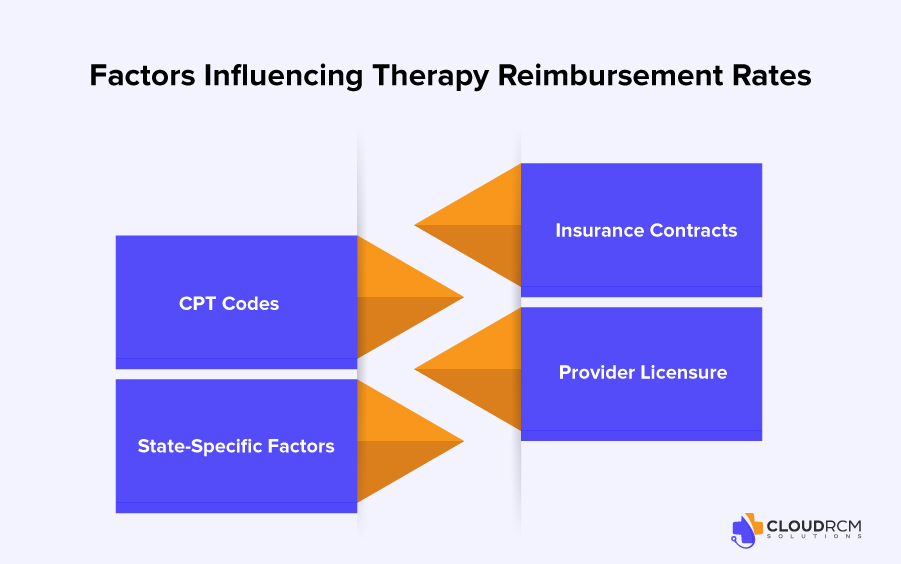
Therapy reimbursement rates in 2026 are determined by several factors often beyond your control. However, some of these factors can be leveraged to maximize your earnings:
1. CPT Codes: The Key to Maximizing Your Payment
Each therapy service you provide is classified using a CPT code. These codes reflect the type of service and its complexity. More specialized or complex sessions, such as family therapy or longer psychotherapy sessions, typically command higher rates. Shorter or standard sessions tend to fall into the lower reimbursement range.
Understanding the value of each CPT code and prioritizing high-reimbursement codes is one of the easiest ways to boost your revenue without needing more patients.
2. Insurance Contracts: In-Network vs. Out-of-Network
Whether you are in-network or out-of-network with an insurance provider plays a significant role in determining how much you are reimbursed.
- In-network providers have agreed to discounted rates in exchange for higher patient volume.
- Out-of-network providers tend to receive higher reimbursement rates, but they often face longer payment cycles and may have smaller caseloads.
Choosing the right balance between in-network and out-of-network can help optimize both your patient load and reimbursement levels.
3. State-Specific Factors: How Location Affects Your Earnings
State-specific differences can significantly impact your reimbursement rates. States with higher costs of living, like California or New York, generally offer higher reimbursement rates for therapy services. Meanwhile, states with lower cost of living might have lower rates, but this can be offset by the number of patients you can see per day.
4. Provider Licensure: Your Credentials Matter
The level of licensure you hold (e.g., LCSW, LMFT, PMHNP) can also affect your reimbursement rates. Higher licensure levels are generally associated with higher reimbursements because insurers recognize the added specialization and expertise.
State-Specific Reimbursement Benchmarks: What to Expect in 2026
Here’s a breakdown of estimated reimbursement ranges for a typical 60-minute therapy session (CPT Code 90837) by location. These estimates reflect the impact of cost of living, regional demand, and Medicare adjustments.
1. High Reimbursement States
| State | Estimated Reimbursement Range (USD) | Why It Pays More |
| California | $90 – $130 | Coastal areas like San Francisco and Los Angeles offer top-tier rates due to high demand. |
| New York | $95 – $115 | Manhattan and Brooklyn enjoy strong Medicare and commercial payer rates. |
| Virginia | $95 – $110 | High demand and Medicare locality adjustments in Northern Virginia and D.C. suburbs drive higher reimbursements. |
Telehealth services in these states are in demand, providing an additional revenue stream for providers.
2. Mid-Range Reimbursement States
| State | Estimated Reimbursement Range (USD) | Why It Pays Average |
| Texas | $85 – $100 | Dallas and Houston provide strong rates, though rural areas see lower rates. |
| Florida | $80 – $95 | Urban areas like Miami and Orlando offer competitive reimbursements with a stable payer mix. |
Focus on leveraging Medicare reimbursements and optimizing patient mix for consistent cash flow.
3. Lower Reimbursement States
| State | Estimated Reimbursement Range (USD) | Why It Pays Less |
| Maine | $60 – $85 | Limited commercial payers and heavy reliance on Medicaid lead to lower reimbursement rates. |
| Alabama | $65 – $80 | Lower rates in rural areas and reliance on Medicaid result in a smaller payout. |
Maximizing Earnings: Offer cash-pay services or non-covered therapy options to supplement lower reimbursements.
Strategies to Grow Your Therapy Practice and Increase Reimbursement Rates in 2026
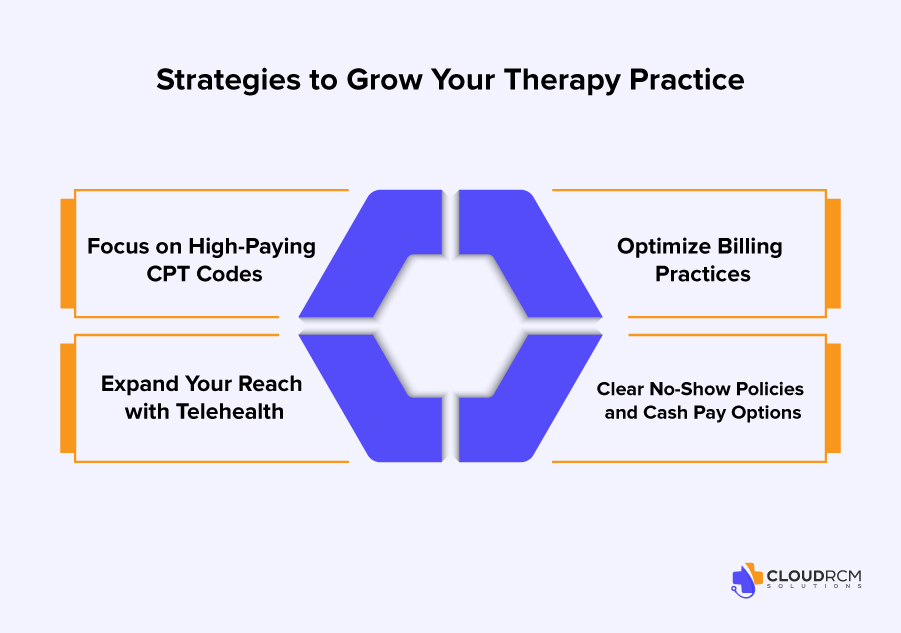
Growth isn’t just about getting more patients, it’s about smartly scaling your practice by improving your revenue cycle, utilizing state-specific strategies, and leveraging technology.
1. Focus on High-Paying CPT Codes
Make sure you’re prioritizing CPT codes that command higher reimbursement rates. Services like family therapy, longer psychotherapy sessions, or specialized therapies often bring in more income.
2. Expand Your Reach with Telehealth
Telehealth has continued to grow, and offering virtual therapy sessions allows you to reach patients in rural areas and urban centers, increasing your client base and expanding your revenue opportunities.
3. Optimize Billing Practices
- Timely submissions are critical. Submit your claims within 14 days to avoid delayed payments.
- Leverage automated billing systems to track claims and reduce errors.
4. Clear No-Show Policies and Cash Pay Options
Protect your time by enforcing no-show fees and cancellation policies. Additionally, offering cash-pay options can help offset lower insurance reimbursements in low-rate regions.
How Cloud RCM Solutions Can Help
If you’re struggling to manage your practice’s revenue cycle effectively, Cloud RCM Solutions can streamline your billing process and increase your reimbursement rates. Here’s how we can help:
- Accurate CPT coding and automated billing to ensure you’re getting paid promptly and correctly.
- State-specific strategies to keep you aligned with local insurance regulations and maximize reimbursements.
- Telehealth billing integration to ensure you’re reimbursed for virtual therapy sessions.
- Faster claim tracking for quick payment processing and reduced administrative overhead.
Conclusion:
By focusing on high-reimbursement CPT codes, optimizing your billing process, and leveraging state-specific strategies, you can maximize your therapy reimbursement rates and ensure your practice’s growth in 2026.
If you’re ready to optimize your therapy billing and take your practice to the next level, contact Cloud RCM Solutions today for a consultation!