
 Medical Billing
 Medical Coding
 Medical Audit
 Provider Credentialing
 Denial Management
 A/R Follow-up
 Private Practice
 Patient Help Desk
 Customized Reporting
 Out-of-Network Billing
 Internal Medicine
 Pediatrics
 Radiology
 Surgery
 Emergency Medicine
 Anesthesiology
 Cardiology
 Orthopedic
 Psychiatry
 Dentistry
 OB-GYN
 Family Medicine
Explaining out-of-network benefits to patients is one of the most important steps in preventing billing confusion, reducing disputes, and improving collections. Many patients assume their insurance will cover most medical costs, but this assumption often leads to frustration when they receive unexpected bills.
In today’s healthcare environment, where transparency and compliance are critical, providers must clearly communicate financial responsibility before services are delivered. Poor communication around out-of-network coverage is one of the leading causes of delayed payments, patient dissatisfaction, and claim issues.
This guide provides a clear, structured approach to explaining out-of-network billing, including real-world examples, cost breakdowns, scripts, and compliance considerations.
What Does Out-of-Network Mean in Medical Billing?
Out-of-network billing refers to a healthcare situation in which a provider is not in-network with a patient’s insurance plan. Because there are no negotiated rates in out-of-network billing, the insurance company typically reimburses a lower portion of the total cost.
- In-network: Pre-negotiated rates, lower patient costs
- Out-of-network: No contract, higher patient responsibility
Understanding this difference is the foundation for accurately explaining patient financial responsibility.
Why Explaining Out-of-Network Benefits to Patients Is Important
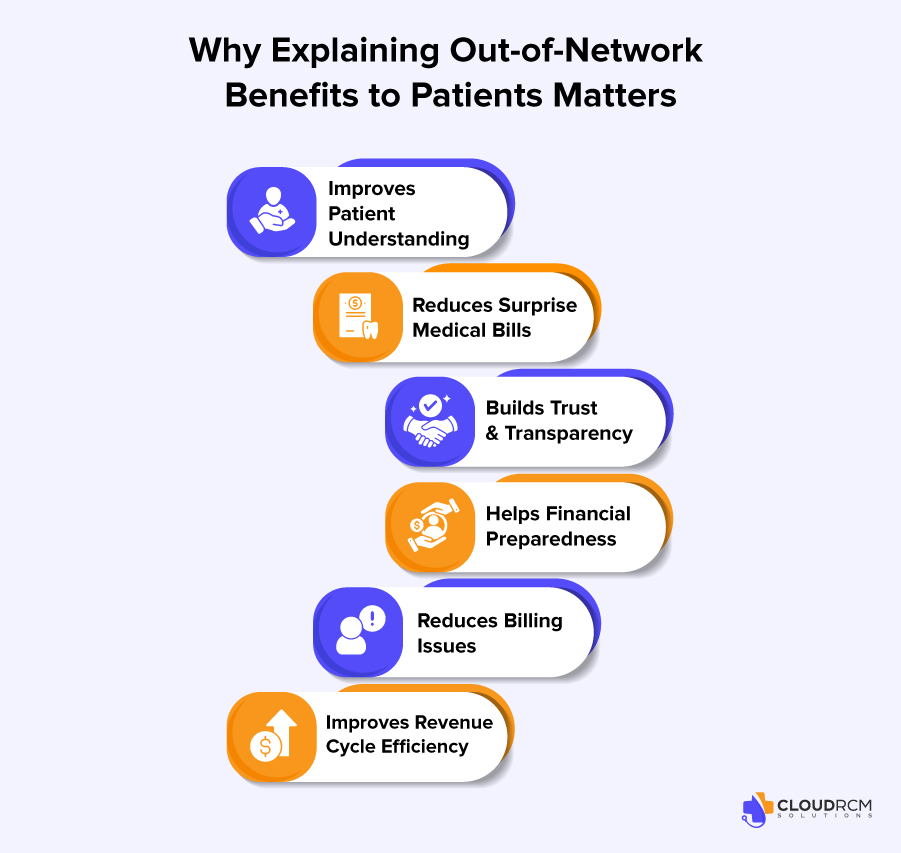
Explaining out-of-network benefits is not just an administrative task; it directly impacts patient trust, satisfaction, and the financial performance of a healthcare practice. When patients are not properly informed, they may feel surprised or misled when they receive their medical bill.
Clear communication helps prevent confusion and builds transparency between the provider and the patient.
- Reduces unexpected medical billing disputes and complaints
- Improves patient trust and long-term relationships
- Helps patients prepare financially before receiving care
- Minimizes claim confusion and reimbursement delays
- Supports better front desk and billing workflow efficiency
Studies show that over 60% of patients are confused by medical bills, and out-of-network charges are a major contributor to that confusion.
In-Network vs Out-of-Network Provider: Key Differences
| Feature | In-Network | Out-of-Network |
|---|---|---|
| Provider Contract | Yes | No |
| Cost to Patient | Lower | Higher |
| Insurance Coverage | Higher % | Lower % |
| Balance Billing | Not allowed | Possible |
| Payment Process | Insurance-first | Often upfront |
When healthcare staff clearly explain this difference in simple terms, patients are better able to understand their financial responsibility before receiving care. This not only reduces confusion and frustration but also improves transparency and trust between the patient and the provider.
Step-by-Step Guide on How to Explain Out-of-Network Benefits to Patients
Explaining out-of-network benefits is easier when you follow a simple, structured approach. The goal is to keep information clear, set expectations early, and avoid confusion before treatment begins.
Step 1: Explain What Out-of-Network Means
Explain that your practice does not have a contract with the patient’s insurance, so coverage may be lower and out-of-pocket costs higher.
Step 2: Explain the Cost Difference Clearly
Clarify that in-network providers offer discounted rates, whereas out-of-network services are billed at standard rates, resulting in higher patient responsibility.
Step 3: Break Down Patient Financial Responsibility
Outline key costs:
- Deductible
- Coinsurance
- Possible balance billing
This helps prevent surprise bills later.
Step 4: Explain the Payment and Claims Process
Let patients know they may need to pay upfront. Provide a superbill so they can submit a reimbursement claim to their insurance.
Step 5: Advise Patients to Verify Insurance Coverage
Advise patients to confirm their coverage, deductible, and reimbursement details with their insurance provider before the visit.
Step 6: Provide Support and Encourage Questions
End with reassurance and invite questions to ensure patients feel confident and informed.
What Patients Pay in Out-of-Network Billing (Deductible, Coinsurance & Balance Billing Explained)
When patients visit an out-of-network provider, their final bill usually consists of several components. Unlike in-network care, where costs are negotiated and predictable, out-of-network billing can vary based on the insurance plan, coverage limits, and provider charges. Understanding these cost components is essential to explaining out-of-network benefits to patients clearly, especially when applying Out of Network Negotiation Solutions to manage complex claims and improve revenue consistency.
In most cases, patients are responsible for more than just a single bill amount. Instead, their total payment is broken into three main parts: deductible, coinsurance, and balance billing.
The deductible is the amount a patient must pay out of pocket before their insurance starts covering any portion of the services. For out-of-network care, the deductible is often higher than in-network deductibles, meaning patients may need to pay more before insurance coverage kicks in.
After the deductible is met, coinsurance applies. This is the percentage of the cost that the patient pays to the insurance company. For example, the insurance may cover 60%, while the patient is responsible for the remaining 40%. The exact percentage depends on the patient’s insurance plan and out-of-network benefits.
The third component is balance billing, which often causes the most confusion for patients. This happens when the provider charges more than what the insurance company considers the “allowed amount.” In this case, insurance pays only up to its approved rate, and the patient is billed for the remaining difference. This can significantly increase the total cost of care if the provider’s charges exceed the insurance reimbursement rate.
- Deductible: Amount paid before insurance begins coverage
- Coinsurance: Percentage shared between patient and insurance
- Balance Billing: Difference between provider charges and insurance allowed amount
When patients understand these three components, they are better prepared for their financial responsibility and less likely to be surprised by their medical bills. A clear explanation of these terms is a key part of effectively explaining out-of-network benefits to patients and building trust in the billing process.
Real-Life Example of Out-of-Network vs In-Network Costs
One of the easiest ways to explain out-of-network billing is through a simple cost example. Patients often find numbers easier to understand than insurance terms.
Let’s assume a medical service costs $1,000.
In-Network Example
- Negotiated cost: $600
- Insurance pays (80%): $480
- Patient pays: $120
👉 Lower cost due to contracted rates.
Out-of-Network Example
- Provider charges: $1,000
- Insurance allowed amount: $500
- Insurance pays (60%): $300
- Patient pays: $200 + possible balance billing ($500)
👉 Higher cost due to the lack of a contract.
Key Takeaway: Out-of-network care often results in higher patient costs, even with insurance coverage. Using simple examples like this helps patients clearly understand their financial responsibility before treatment.
How to Help Patients Understand Out-of-Network Insurance Claims
Out-of-network billing can confuse patients if the process isn’t clearly explained. The goal is to set expectations early so they know what happens after their visit.
Patients should understand that they may need to pay the full amount at the time of service since the provider is not contracted with their insurance.
After payment, they receive a superbill, which includes medical codes and service details needed to file a claim for reimbursement.
Once submitted, the insurance company reviews the claim and reimburses in accordance with out-of-network benefits, deductible status, and plan rules. This process may take several weeks.
- Patients may need to pay upfront for services
- A superbill is provided for insurance claim submission
- Patients must file the claim themselves or through assistance
- Insurance reviews and reimburses based on plan rules
- Processing time can take several weeks
A clear explanation of this process helps reduce confusion, improve patient satisfaction, and ensure better understanding of out-of-network billing.
Common Mistakes When Explaining Out-of-Network Benefits to Patients
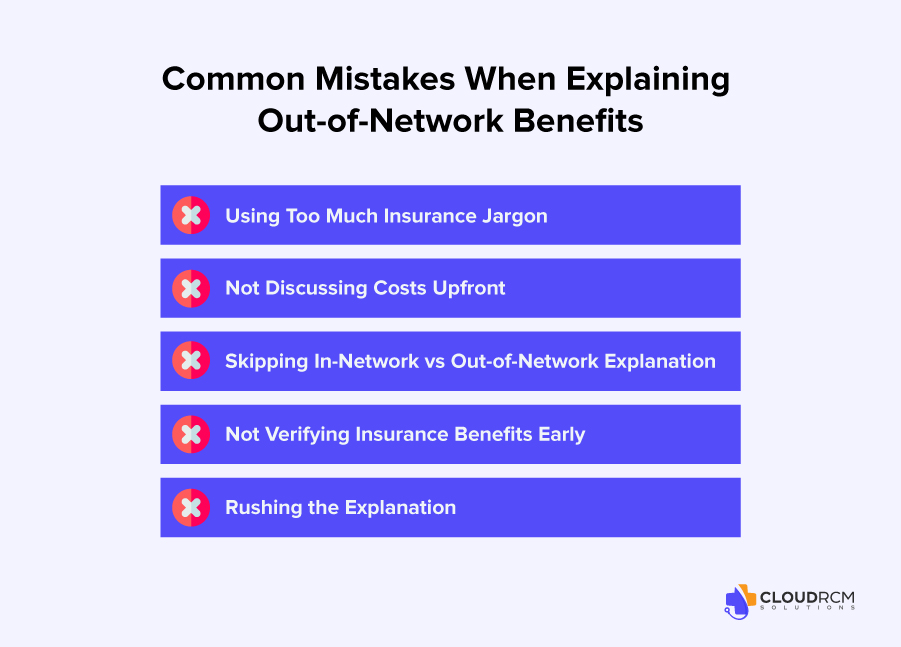
Even though explaining out-of-network benefits may seem simple, many healthcare staff members unintentionally make mistakes that lead to patient confusion, billing disputes, and loss of trust. Avoiding these errors is key to improving communication and patient satisfaction.
One of the biggest mistakes is using too much insurance jargon. Terms like deductible, coinsurance, and balance billing can overwhelm patients if not explained in simple language.
Another common issue is not discussing costs upfront. Without clear estimates before treatment, patients may experience “bill shock,” leading to frustration and payment delays.
Many providers also fail to clearly explain the difference between in-network and out-of-network coverage, which often results in misunderstandings about why costs are higher.
Other frequent mistakes include:
- Not verifying insurance benefits in advance
- Skipping cost estimates before treatment
- Not allowing time for patient questions
- Rushing through financial explanations
Patients often feel uncertain when their coverage details are not confirmed beforehand or when explanations are too fast or unclear.
Avoiding these mistakes ensures better communication, builds trust, and helps patients fully understand their financial responsibility before receiving care.
What to Say When Explaining Out-of-Network Benefits to Patients
One of the most effective ways to improve patient understanding is to use clear, consistent scripts. When staff know exactly what to say, it reduces confusion, avoids miscommunication, and ensures every patient receives the same accurate explanation. This is especially important when explaining out-of-network benefits to patients, where insurance terms can easily become overwhelming.
Below are simple, real-world scripts that healthcare staff can use in different situations to communicate clearly and confidently.
1. Basic Explanation Script (Simple & Neutral Tone)
“Your insurance considers this visit out-of-network, meaning we don’t have a contracted rate. Your insurance may cover less, and your out-of-pocket cost could be higher. We’ll provide documents for possible reimbursement.”
2. Cost Transparency Script (Before Appointment)
“Since we are out-of-network, your costs may be higher than with in-network providers. You may be responsible for a deductible, coinsurance, or any unpaid balance.”
3. Superbill Explanation Script
“After your visit, we’ll give you a superbill with all service details and codes. You can submit it to your insurance for possible reimbursement.”
4. Script for Confused or Concerned Patients
“I understand insurance can be confusing. Since we are out-of-network, your plan may not cover the full cost, but we’re here to guide you through it.”
5. Short 20–30 Second Quick Script
“We are out-of-network, so your insurance may cover part of the visit, but your out-of-pocket cost could be higher. We’ll provide all details and a superbill for reimbursement if eligible.”
Conclusion
Clearly explaining out-of-network benefits helps prevent billing confusion, reduce claim disputes, and build stronger patient trust. When patients understand their coverage and financial responsibility, they make better decisions and face fewer surprise medical bills. Simple, clear communication also improves patient satisfaction and strengthens overall revenue cycle performance.
Need help with out-of-network billing?
Cloud RCM Solutions helps simplify patient communication, reduce denials, and streamline your revenue cycle for smoother, more efficient billing.
FAQ’s
What does out-of-network mean in simple terms?
Out-of-network means the healthcare provider does not have a contract with the patient’s insurance company. Because of this, the insurance plan may cover less of the cost, and the patient may be responsible for a higher portion of the bill.
Why is out-of-network care more expensive?
Out-of-network care is more expensive because there are no negotiated rates between the provider and the insurance company. As a result, insurance may only reimburse based on their allowed amount, and patients may have to pay the difference.
Do patients always have to pay upfront for out-of-network services?
In many cases, yes. Out-of-network providers may require patients to pay at the time of service and then provide a superbill so the patient can submit a claim to their insurance for possible reimbursement.
What is balance billing in out-of-network care?
Balance billing occurs when a provider charges more than the amount the insurance company considers allowed. The insurance pays their portion, and the patient is responsible for the remaining difference.
Can patients get reimbursed for out-of-network services?
Yes, depending on their insurance plan. Patients may submit a claim using a superbill, and the insurance company may reimburse part of the cost based on out-of-network benefits, deductible status, and coverage rules.
How can providers help patients understand out-of-network benefits better?
Providers can help by using simple language, explaining costs upfront, providing examples, offering superbills, and guiding patients through the insurance claims process step by step.
Is emergency care covered if it is out-of-network?
In many cases, emergency services are treated differently, and insurance may cover them at in-network levels even if the provider is out-of-network. However, coverage depends on the patient’s specific insurance plan.
What should patients do before choosing an out-of-network provider?
Patients should contact their insurance company to confirm coverage, understand their deductible and coinsurance, check reimbursement rules, and ask whether pre-authorization is required.