Medical Billing
 Medical Coding
 Medical Audit
 Provider Credentialing
 Denial Management
 A/R Follow-up
 Private Practice
 Patient Help Desk
 Customized Reporting
 Out-of-Network Billing
 Internal Medicine
 Pediatrics
 Radiology
 Surgery
 Emergency Medicine
 Anesthesiology
 Cardiology
 Orthopedic
 Psychiatry
 Dentistry
 OB-GYN
 Family Medicine
In 2026, healthcare practices of all specialties face an increasingly competitive landscape. Patients are turning to digital tools, expecting personalized care experiences, and seeking faster, more convenient access to healthcare. Practices that adapt to these changing expectations will not only attract new patients but also retain them, staying ahead of the competition.
The key to success lies in combining innovative marketing strategies with streamlined operations, particularly billing systems, to enhance the overall patient experience. Let’s explore essential strategies to help healthcare practices across all specialties thrive in 2026, and see how these strategies can be applied to your practice, regardless of your field.
Key Strategies For Healthcare Practices In 2026
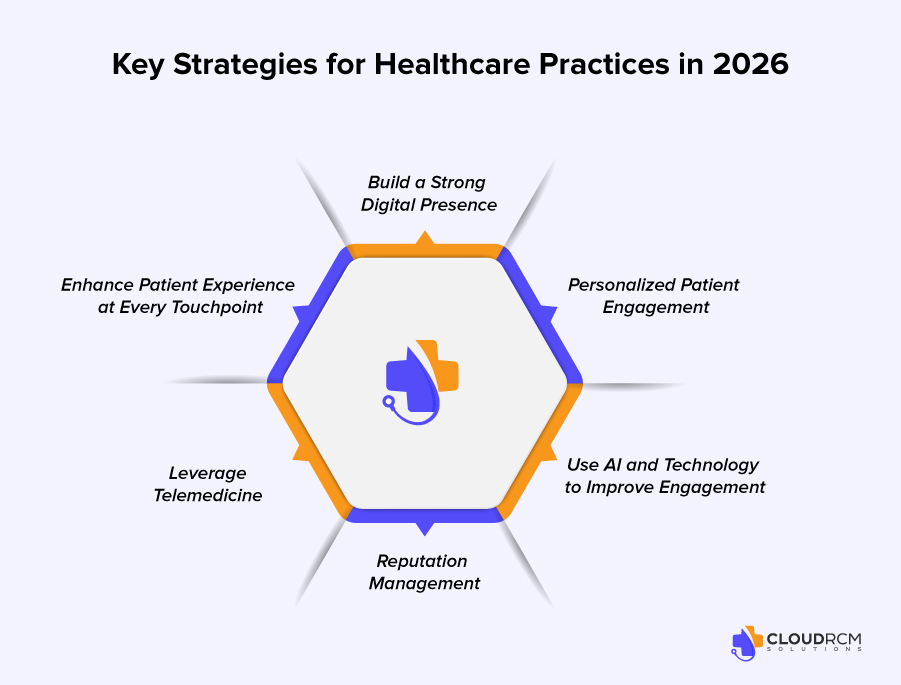
1. Build a Strong Digital Presence That Drives Awareness
In 2026, a robust digital presence is the foundation of healthcare marketing. Most patients now begin their healthcare journey online, searching for providers, reading reviews, and scheduling appointments. If your practice is not easily found, you risk missing out on valuable patients.
Strategic Approaches:
- Local SEO Optimization: Ensure your practice is visible in local search results. Over 70% of healthcare-related searches are location-based.
- Mobile-Friendly Experience: More than 60% of patients book appointments via mobile devices. Ensure your website is mobile-optimized for a seamless experience.
Why This Matters:
If your practice doesn’t show up where and when patients are searching, you risk losing potential patients to competitors. Patients expect fast, easy access to services if you aren’t meeting those expectations, they’ll find someone who will.
Enhancing Billing with Digital Tools:
Your website should not only serve as an informational resource but also facilitate online payments. A transparent, easy-to-navigate payment system allows patients to view and pay their bills, reducing financial confusion and promoting trust.
2. Focus on Personalized Patient Engagement
Patients today expect a personalized experience. In fact, 77% of patients report that personalized communication influences their decision when selecting a healthcare provider. Every interaction, whether digital or in-person, should feel tailored to the individual.
Strategic Approaches:
- Segment Patient Groups: Use patient data to segment your audience based on factors like age, health conditions, or treatment history. Send personalized messages or reminders based on their unique needs.
- Automated Communication: Implement automated systems to send reminders for appointments, preventive care, or follow-up actions.
Why This Matters:
Personalized engagement fosters trust and builds long-term relationships. When patients feel understood and cared for as individuals, they are more likely to stay with your practice.
Billing Transparency Builds Loyalty:
Patient loyalty is also tied to billing practices. Clear, upfront communication about costs and payment options can go a long way in avoiding frustration and ensuring patients feel valued throughout their care journey.
3. Enhance Patient Experience Across Every Touchpoint
The patient experience is shaped by every interaction they have with your practice, from the first online search to post-appointment follow-ups. Practices that offer seamless, engaging experiences are more likely to retain patients.
Strategic Approaches:
- Easy Appointment Scheduling: Offer convenient, online appointment booking that’s easy to navigate and allows patients to choose the best time for their needs.
- Patient Portals: Provide patients with secure access to their health records, test results, and appointment history, so they feel empowered and informed.
Why This Matters:
A smooth patient experience leads to higher satisfaction and better retention. By minimizing friction and making every step of the patient journey as easy as possible, you foster stronger relationships.
Simplified Billing for a Better Experience:
Billing should be integrated into the patient journey seamlessly. By offering online payment options and sending reminders, you can ensure patients never feel overwhelmed or confused about their financial responsibilities.
4. Leverage Telemedicine as Part of Your Patient Outreach
Telemedicine continues to grow as a preferred option for many patients, particularly for follow-up visits or consultations that don’t require in-person appointments. As the global telehealth market is projected to exceed $500 billion by 2026, offering virtual care is essential to staying competitive.
Strategic Approaches:
- Promote Telemedicine Services: Ensure your patients are aware of your telemedicine options, particularly for consultations and follow-up visits that don’t require physical presence.
- Seamless Integration: Make virtual visits as easy to access as in-person appointments. Ensure the booking and connection process is straightforward and user-friendly.
Why This Matters:
Telemedicine offers convenience and accessibility, which today’s patients highly value. Practices that don’t offer remote care options may lose out on patients who prefer virtual visits due to time constraints or distance.
Telemedicine and Billing Integration:
Ensure your billing system accommodates telemedicine visits, so patients are clear about the costs associated with virtual appointments. Clear communication about billing ensures that patients won’t be confused or frustrated by virtual care fees.
5. Use AI and Technology to Support Patient Engagement
Artificial Intelligence (AI) is transforming healthcare by improving patient engagement, streamlining operations, and enhancing the patient experience. AI tools can automate many tasks, from answering basic questions to sending reminders and even improving billing processes.
Strategic Approaches:
- AI-Powered Chatbots: Use chatbots on your website to help patients book appointments, answer questions, or direct them to the right resources.
- Automated Reminders: Set up automated systems to remind patients about appointments, preventive care, or upcoming treatments.
Why This Matters:
AI helps reduce the administrative burden on your staff and ensures that your practice can respond more quickly to patient inquiries. The convenience of AI-powered tools makes it easier for patients to get the information they need without waiting for staff assistance.
AI for Billing Efficiency:
AI-driven systems can automate billing reminders, follow-ups, and insurance verification. These tools reduce manual workloads, ensure timely payments, and make the entire process more efficient for both patients and staff.
6. Review Management and Reputation Signals
84% of patients trust online reviews just as much as personal recommendations. Managing your practice’s online reputation is essential for attracting new patients and retaining current ones.
Strategic Approaches:
- Ask for Reviews: Encourage satisfied patients to leave reviews on platforms like Google, Yelp, and Healthgrades.
- Respond to Negative Reviews: Address negative feedback quickly and professionally. Resolving issues in a respectful manner helps build patient trust.
Why This Matters:
A positive online reputation can be the deciding factor for new patients. Practices with a strong digital reputation are more likely to attract new patients who are looking for trustworthy providers.
Billing Transparency Impacts Reputation:
Patients are more likely to leave positive reviews if their billing experience is smooth and transparent. Clear billing practices and minimal confusion can positively affect how patients perceive your practice and, ultimately, your reputation.
How Cloud RCM Solutions Can Support Your Practice in 2026
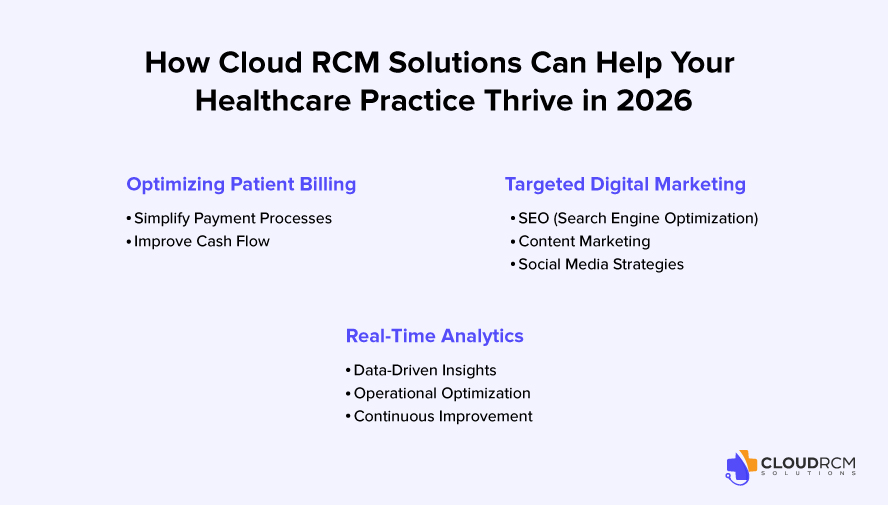
Implementing these strategies requires the right tools to make them effective. Cloud RCM Solutions offers tailored support to healthcare practices looking to streamline patient engagement, optimize billing systems, and integrate digital marketing strategies.
What Cloud RCM Solutions Can Help With:
- Optimizing Patient Billing: Simplify payment processes and improve cash flow with efficient billing systems.
- Targeted Digital Marketing: Reach the right audience with SEO, content marketing, and social media strategies designed to elevate your practice’s visibility.
- Real-Time Analytics: Gain actionable insights to continuously improve your marketing and operational performance.
Conclusion
As healthcare continues to evolve, practices that embrace technology, personalization, and innovative marketing will stay competitive. By integrating these strategies and leveraging the right tools, you can attract, engage, and retain more patients across all specialties while delivering excellent care.
Cloud RCM Solutions is here to support your practice every step of the way. Whether you’re looking to improve patient acquisition, streamline billing, or enhance your marketing efforts, we have the expertise and tools to help your practice thrive. Contact us today to learn how we can help you grow in 2026.
FAQ’s
What digital marketing strategies are most effective for attracting new patients?
The most effective strategies include local SEO optimization, mobile-friendly websites, targeted social media campaigns, and content marketing focused on patient education. These methods ensure your practice is visible to patients in your area and provides valuable information that builds trust.
How can I make my practice’s website more patient-friendly?
Ensure your website is mobile-optimized, easy to navigate, and includes online appointment booking, a patient portal for secure access to records, and clear information about services and insurance. Additionally, integrating online billing and payment options makes the patient experience more convenient.
How can personalized patient engagement benefit my practice?
Personalized patient engagement fosters stronger relationships by ensuring communication is relevant and tailored to each patient’s needs. Automated messages, follow-up reminders, and targeted health tips can improve patient retention, satisfaction, and overall loyalty to your practice.
What role does telemedicine play in patient engagement?
Telemedicine provides patients with the convenience of remote consultations, especially for follow-ups or non-emergency care. By offering telemedicine, you can meet the needs of patients who value convenience, reduce no-shows, and expand your patient base beyond your local area.
How can AI and technology improve my practice’s operations?
AI and automation can reduce administrative workloads by handling tasks like appointment scheduling, reminders, answering frequently asked questions via chatbots, and streamlining billing processes. These technologies enhance operational efficiency, improve patient experience, and free up staff to focus on care delivery.
How can Cloud RCM Solutions help my practice with reputation management?
Cloud RCM Solutions helps improve your online reputation by facilitating a smoother patient experience, from easy appointment scheduling to clear billing communication. We also encourage patients to leave reviews and guide you in responding to negative feedback, all of which contribute to building a positive online presence that attracts new patients.